Do You Need to Cover the Entire Wall With Acoustic Panels?
Updated
No, you don't need to cover the entire wall with acoustic panels: 15 to 25% of a room's wall area is Primacoustic's starting point (opens in a new tab) for cutting echo. Its Broadway manual (opens in a new tab) gives rough coverage of 10% for budget echo control, 25% for a home theater or practice room, 35% for a studio control room and 45% for a voice-over booth.
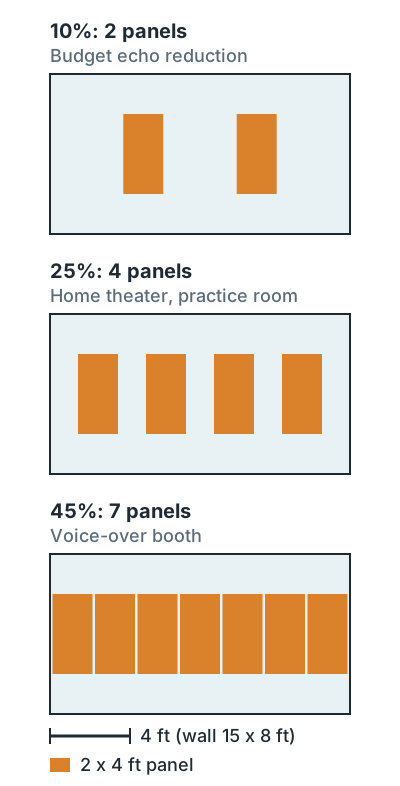
A full wall of thin panels backfires. The room ends up sounding dead in the highs and still boomy in the bass. One inch of Owens Corning 703 (opens in a new tab) absorbs 0.05 of the sound at 125 Hz against an NRC of 0.70, so it eats up voices but lets bass right past. Spread the same panels over the side walls and ceiling instead, put thick ones in the corners, and get the count from how many acoustic panels you need.
Watch out: Full coverage only matters when you're blocking noise. A barrier like mass loaded vinyl or an extra layer of drywall has to cover the whole wall with sealed edges. In PABCO's example (opens in a new tab), one 1/8 in. gap 1 ft long drops a wall from STC 46 to 36.
The soundproof panels guide shows what that build looks like, and there are more answers in the soundproof panels FAQ.